


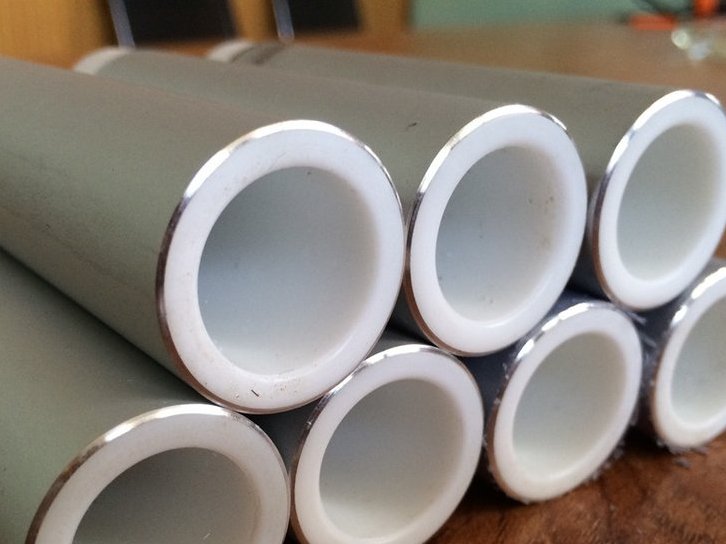
PE pipe construction covers pipe groove excavation, pipe connection, installation and laying, backfilling protection, pressure test and cleaning, etc. Appropriate connection mode shall be selected according to engineering requirements and construction quality of each link shall be strictly controlled. The following is the specific construction method:
1. Pipe Groove Excavation and PreparationExcavation requirements:
Pipe trench excavation should be straight line, and the width of trench bottom excavation is usually DN (pipe nominal diameter) 0.30m. If the pipeline needs to be connected underground, the width of the groove bottom at the interface should be appropriately increased, not less than DN 0.50m, so as to facilitate the installation and docking.
When the pipeline is buried, the minimum pipe top covering depth shall meet the design requirements. Generally speaking, when buried under the roadway, it should not be less than 0.80m; when buried under the sidewalk, it should not be less than 0.60m. If the design depth is not reached across the roadway, steel casing shall be laid for protection.
When thepipe groove turns, the turning angle should not be too large, and the bending radius should meet the requirements. For example, the allowable bending radius R(mm) of PE pipe varies according to the pipe diameter D(mm), for example, when D≤ 50, R = 30D;50 trench bottom treatment: When the pipe trench is excavated manually, the bottom of the trench shall be flat and dense without sharp objects. The bottom of the trench may have undulations, but the pipe must be smoothly supported. , it must be backfilled and compacted to ensure the stability of the trench bottom. Pipe Cutting: the use of professional cutting equipment, and strive to cut smooth straight, to ensure the quality of cutting. connection method: hot-melt connection: including hot-melt socket connection and hot-melt butt connection. The hot melt connection has the advantages of low cost, good quality of pipe interface and no need of pipe fittings. During construction, the pipe or pipe fitting shall be placed on the docking machine, leaving enough cutting allowance, and the steps of clamping, cutting, centering, heating, switching, melting and docking and cooling shall be carried out. The heating temperature is generally controlled between 210-230 ℃, and the heating time is calculated according to the thickness of the pipe. Electrofusion connection: suitable for the connection between the pipe and the electrofusion pipe fittings. During construction, it is necessary to scrape off the oxide layer of the pipe to ensure that the contact surface is clean; use a special electric fusion welding machine, the input voltage is stable, and the welding time and current meet the specifications. During quality inspection, it is necessary to observe whether the observation hole of the electrofusion sleeve is pushed out to ensure sufficient welding. Mechanical connection: such as flange, clamp connection, suitable for temporary works or other material pipe connection. During construction, it is necessary to check whether the sealing ring is in good condition and the bolts are tightened evenly. Special parts treatment: In the pipeline elbow, tee, tapered joint, fire hydrant, etc., C20 concrete is required to set the concrete abutment, and the flange valve is reinforced with brick abutment. When PE water supply pipe is connected with metal pipe, valve and fire hydrant, steel plastic transition joint or special flange connection must be adopted. Backfill Requirements: After the installation and laying of the pipeline is completed, it shall be backfilled immediately after the acceptance of the concealed works. During backfilling, the accumulated water in the tank shall be prevented from causing the pipeline to float. If there is accumulated water, it shall be drained. When backfilling the pipe groove in the stonework and earth-rock mixed section, the clay or sand shall be transported and backfilled to the top of the pipe 200-300mm, and other miscellaneous soil shall be backfilled after compaction. Backfilling must be backfilled from both sides of the pipe at the same time, backfilling layer by layer. Before pipeline pressure test, backfill soil should not be less than 500mm under normal circumstances. Large-area backfilling after pipeline pressure test should be carried out when the pipeline is filled with water, and the pipeline should not be left empty for a long time after laying. Pipeline Protection: For pipelines with long distances or slopes, special pipe brackets should be provided to maintain their stability and prevent sinking. After the pipeline installation is completed, a pressure test must be carried out, which is an important step to ensure the safety and reliability of the pipeline system. pressure test: Before the pressure test, the hydraulic test procedure shall be prepared, and the test water pressure is generally 1.5 times of the service pressure. Keep for a certain period of time (such as 10-20 minutes), no leakage and pressure gauge pressure drop does not exceed the specified value (such as 0.1Mpa), you can pass the pressure test. pressure test shall be conducted in sections for complex pipelines to ensure the construction quality of each part. cleaning and disinfection: pressure test is qualified, the pipeline shall be cleaned and disinfected. According to the water supply and drainage pipeline engineering construction and acceptance of implementation, section flushing. The flushing water source is led out from the original water supply pipe, and the flushing flow rate of the newly installed water supply pipe is generally not less than 1 m/s. Before flushing, temporary drain valves and temporary drain pipes shall be installed in some places to divert water to appropriate positions for discharge. After washing, it is tested by the health department and can be delivered for use only after meeting the "Sanitary Standard for Drinking Water.