

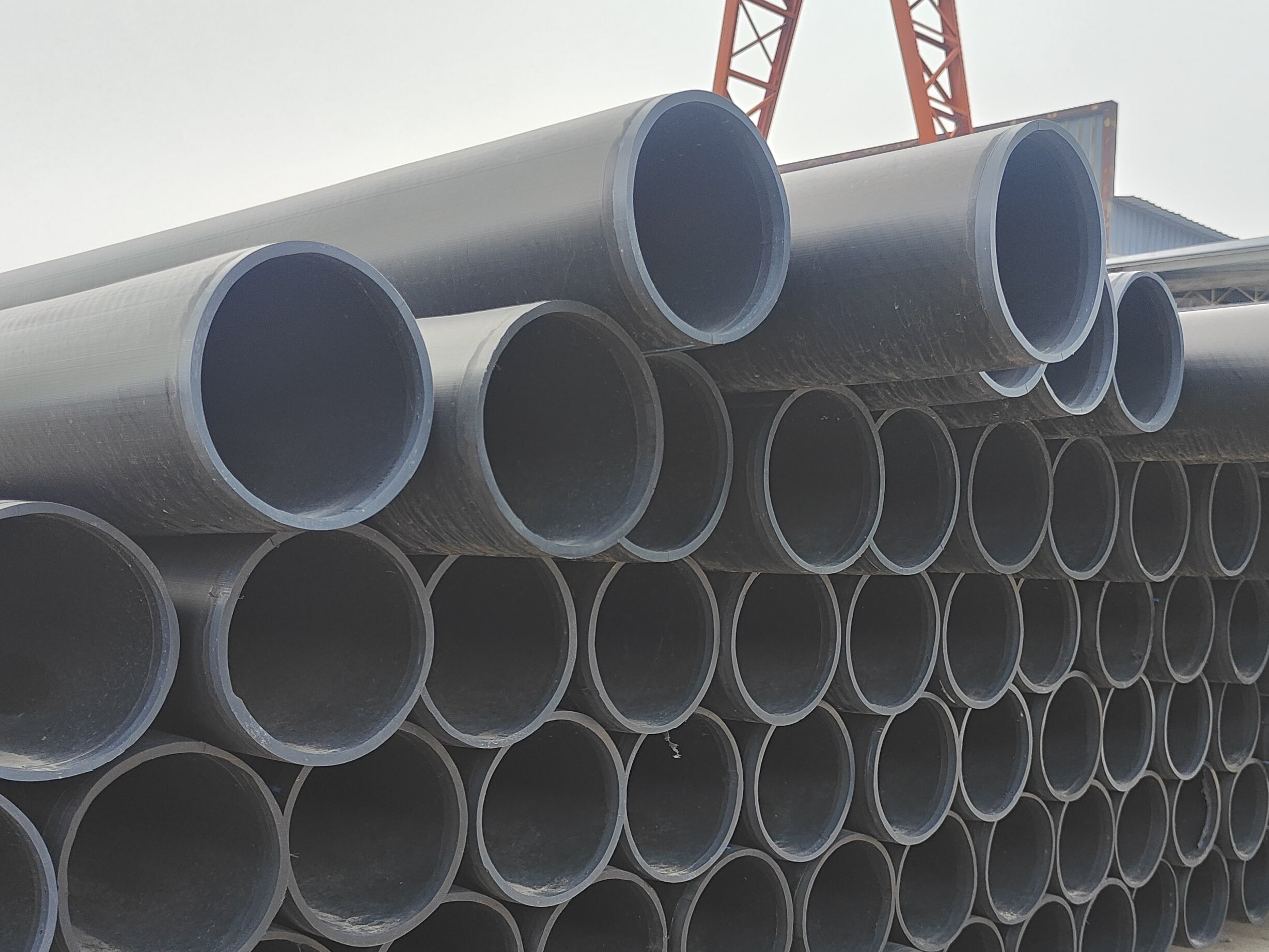
Polyethylene (PE) water supply pipe systems are subject to pressure reduction due to temperature. When a polyethylene pipe system is used continuously at temperatures above 20℃, for a given material, if a smaller reduction is deemed feasible based on the analysis in GB/T 18252, a higher reduction factor can be used. Municipal drinking water pipes are blue or black, and black pipes should have co-extruded blue stripes. There should be at least three stripes along the longitudinal direction of the pipe.
PE water supply pipes are a type of PE pipe. There are many types of PE pipes, used in many fields, including...PE is used in water supply, wiring, and gas transmission. All three are made of polyethylene, but the grades of polyethylene differ. Due to its high strength, corrosion resistance, and non-toxicity, PE polyethylene is widely used in water supply pipe manufacturing. Because it does not rust, it is an ideal replacement for ordinary iron water supply pipes. PE water supply pipes conform to the national standard GB/T 13663-2000 'Polyethylene (PE) Pipes for Water Supply.' The following three grades are generally used in the manufacture of PE pipes...Pipes are made of polyethylene 63, 80, and 100 materials. The higher the number, the stronger the pressure resistance of the polyethylene. PE80 and 100 can be used for gas pipelines for added safety. PE63 is generally chosen for water supply pipes, and its performance is reliable. Other water pipes can be blue or black. Pipes exposed to sunlight (such as above-ground pipes) must be black. The inner and outer surfaces of the pipes should be clean and smooth, free from bubbles, obvious scratches, and dents.Impurities and uneven coloring are defects. The pipe ends should be cut cleanly and perpendicular to the pipe axis. Standard straight pipe lengths are 6m, 9m, and 12m, but can be agreed upon by the supplier and buyer.