

The most commonly used materials in water supply and drainage engineering are various pipes. What do you know about these commonly used pipes? Different pipes have different functions and uses. Let's learn about them together!
I. Polyethylene (PE) Pipes
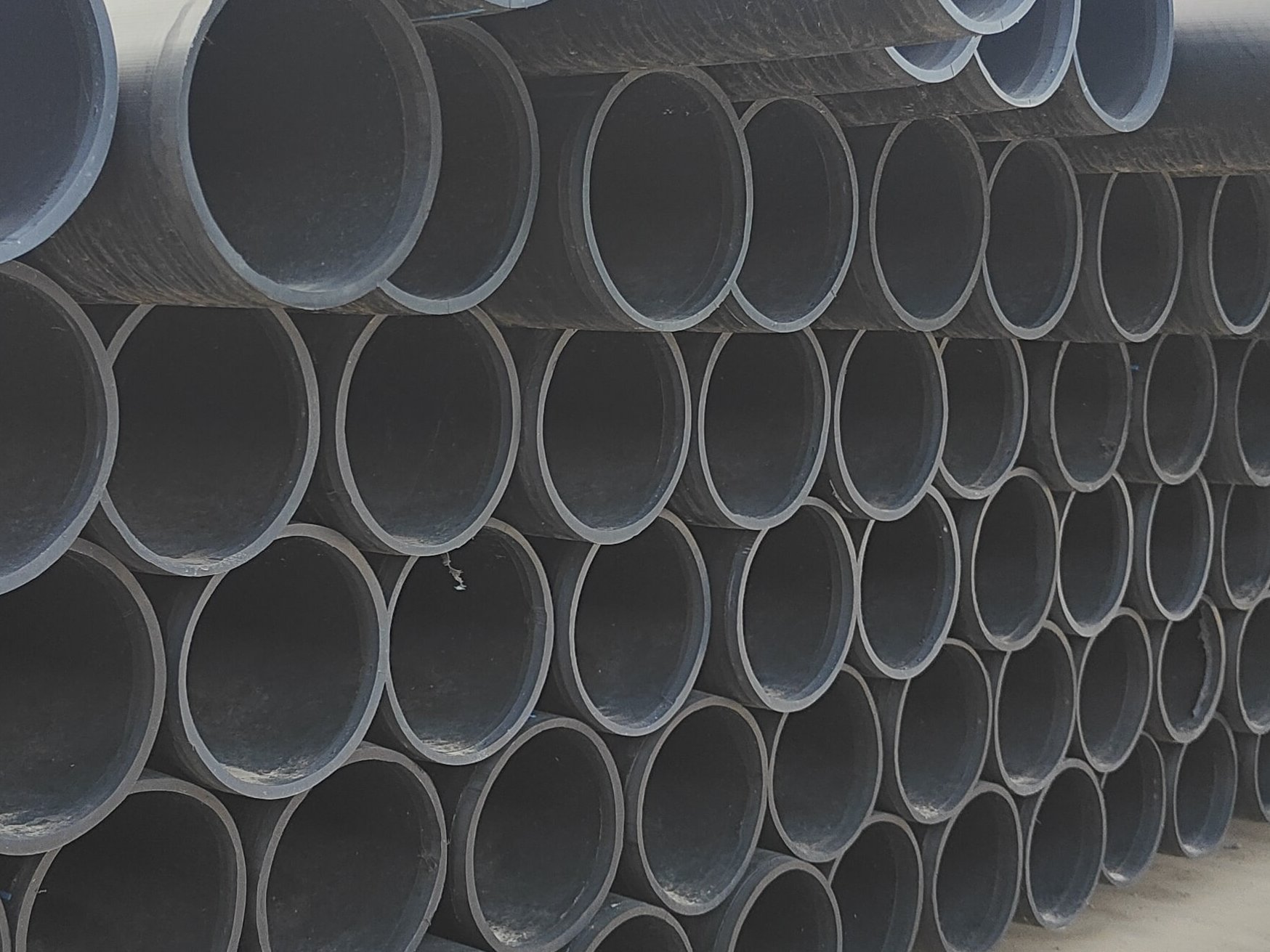
PE pipes are processed without the addition of heavy metal salt stabilizers. The material is non-toxic, does not form scale, and does not breed bacteria, effectively solving the problem of secondary pollution of urban drinking water. Except for a few strong oxidants, it can resist the erosion of various chemical media; there is no electrochemical corrosion. At rated temperature and pressure…Under normal circumstances, PE pipes can be used safely for more than 50 years. PE pipes have good toughness and high impact resistance; even if heavy objects directly press on the pipes, they will not cause them to break. The strength of the heat-fused or electrofused joints of PE pipes is higher than that of the pipe body itself, and the joints will not break due to soil movement or live loads. The pipes are lightweight, the welding process is simple, construction is convenient, and the overall project cost is low." II. Random Copolymer Polypropylene (PP-R) Water Supply Pipes PP-R pipes, also called Type III polypropylene pipes, are made from random copolymer polypropylene through extrusion and injection molding.Pipe fittings. PP-R is a new type of plastic pipe product developed and applied in Europe in the early 1990s. It was developed in the late 1980s using a gas-phase copolymerization process to randomly and uniformly polymerize approximately 5% PE within the PP molecular chain (random copolymerization), resulting in a new generation of pipe material. It has good impact resistance and long-term creep resistance. Advantages of PPR pipes: moderate price, stable performance, heat resistance and insulation, corrosion resistance, smooth inner wall without scaling, safe and reliable piping system, non-permeable, and a service life of up to 50 years. It is touted as never scaling, never rusting, and never leaking.Green and high-grade water supply material. Disadvantages of PPR pipes: High technical requirements for construction; specialized tools and professionals are needed to ensure system safety. Applications of PPR pipes: 1. Hot and cold water systems in buildings, including centralized heating systems; 2. Heating systems in buildings, including floor, wall panel, and radiant heating systems; 3. Directly potable pure water supply systems; 4. Central (centralized) air conditioning systems; 5. Transporting or discharging chemical media, etc.Use a piping system.